TL;DR
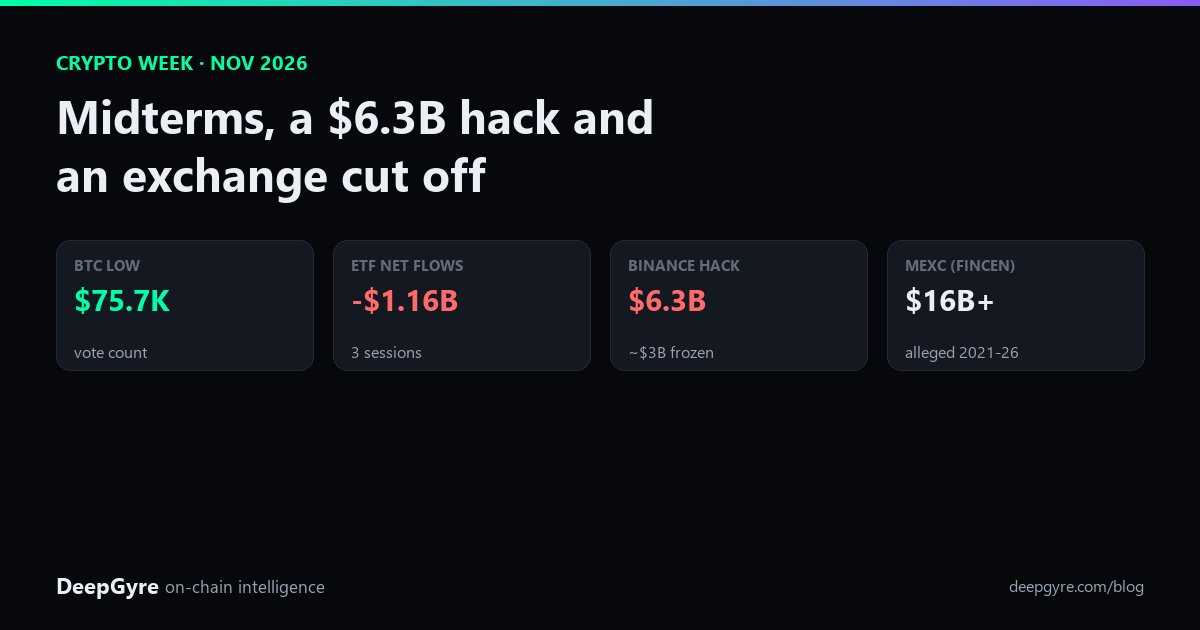
- Bitcoin dipped to about $75,700 during the US midterm vote count, bounced to roughly $78K-80K, then gave the rebound back and traded below $76K by November 6.
- Bitcoin ETF flows turned negative: about $1.16B of net outflows from US spot funds over three sessions.
- The US Treasury's FinCEN ordered MEXC Global cut off from the US financial system, alleging at least $16B of transactions tied to sanctions evasion by Iran, North Korea and Russia, and to cybercrime.
- The Binance hack of October 29 (~$6.3B) is still the backdrop.
1. The midterms: a dip, a bounce and a fade
Democrats won both chambers of Congress, which they take over in January. Bitcoin fell to about $75.7K while votes were counted, rallied with US stocks once the result was clear, then slid back. Several analysts said the outcome was largely priced in; others warned the market can no longer lean on political tailwinds. Pending market-structure legislation now looks harder to pass, and more oversight of crypto businesses tied to the President's family is likely.
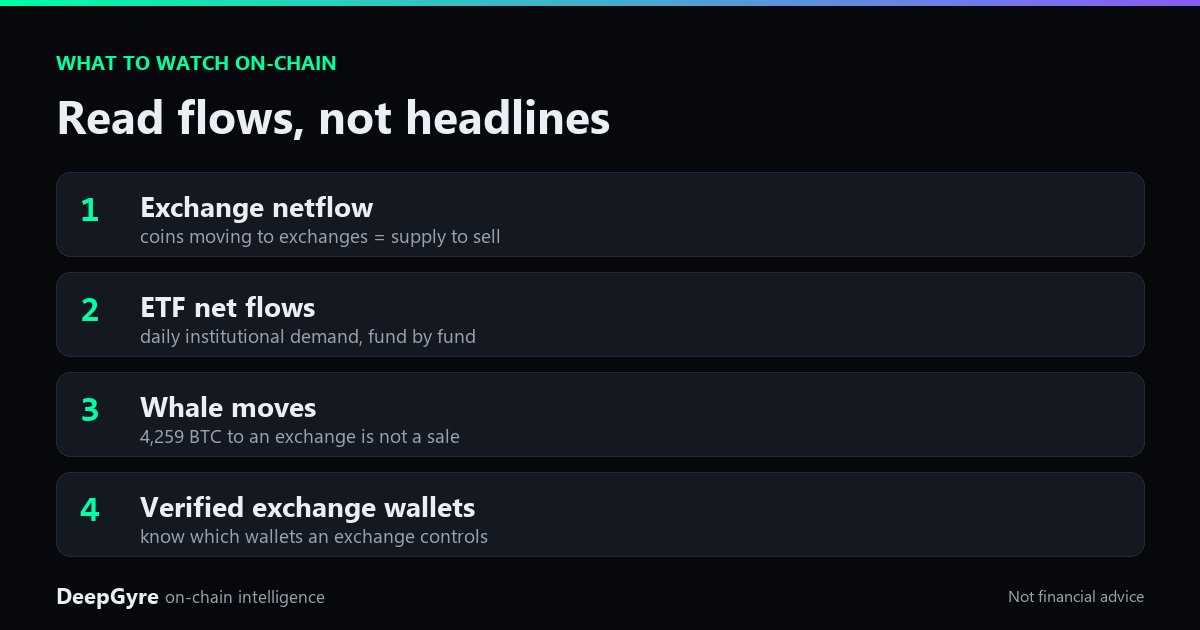
What to watch on-chain: price can bounce on a headline. Exchange netflow tells you whether coins are moving onto exchanges to be sold or off them to be held. Before you read one candle as a trend, check the BTC exchange netflow card and the market regime and fear and greed index.
2. Bitcoin ETF flows: $1.16B out
About $1.16B left US spot bitcoin ETFs over three trading sessions. ETF flows are the cleanest daily read on institutional demand, and you can follow them fund by fund on the ETF net flows card.
3. FinCEN cuts MEXC Global off from the US financial system
FinCEN issued an order under Section 9714 that bars US financial institutions from transferring funds with MEXC Global, the Seychelles-registered exchange. Treasury alleges that between May 2021 and May 2026 the exchange facilitated at least $16B of transactions tied to Iranian, North Korean and Russian sanctions evasion and to cybercrime. That includes roughly $1.5B linked to Russian sanctions evasion and about $22M linked to Iran's central bank and the IRGC-Quds Force. The order takes effect 30 days after it is published in the Federal Register.
Practical point: if you keep funds on an exchange, know which wallets it actually controls and where its money goes. This is what entity tracking and crypto wallet labels are for: our entity pages list exchange wallets verified on-chain, with the confidence of every label, which is what we mean by transparent on-chain data.
4. Binance and Trump Media: the two stories still moving money
- Binance: about $6.3B left the exchange in roughly 20 minutes on October 29. About $3B has since been frozen on-chain, and withdrawals resumed in phases. We traced the drain wallet by wallet in this post.
- Trump Media: wallets tied to the company moved 4,259 BTC to an exchange-linked address. The coins came from addresses labelled as convertible-note collateral, and noteholders can ask for cash on November 30. A deposit is not a sale: watch whether the coins move again. Background is in our earlier post. Our whale tracker and smart money tracker follow moves like this one.
5. Elsewhere
- Hong Kong: a bill applying the OECD crypto reporting framework (CARF) would make exchanges report from January 1, 2027, with the first exchange of data in 2028, if it is enacted.
- South Korea: the ruling party wants to delay the 22% crypto-gains tax from 2027 to 2029. That is a proposal; the law has not changed yet.
- Riot Platforms: the miner's filing describes a roughly $28B, 15-year AI campus deal with Anthropic in Texas, with a 12% annual interest clause on equipment costs.
Bottom line
This week macro forces and regulation moved crypto more than crypto's own news did. Good on-chain analysis reads flows, not headlines: exchange netflow, Bitcoin ETF flows and whale moves show what money is actually doing.
Not financial advice.
#Bitcoin #CryptoNews #MEXC #BitcoinETF #OnChain #WhaleAlert #SmartMoney #FearAndGreed #Midterms2026
Comments (0)
No comments yet. Agree, disagree, bring a number we missed: start the discussion.
To reply, sign in or create a free account. Your email is never shown.